How to Choose a Composite Door: Styles, Colours, Glass and Hardware
A front door is the one thing every visitor touches. Get it right and the whole house looks better. This guide walks through the four decisions in the order we take customers through them: style, colour, glass, then hardware.
1. Style: match the house, not the catalogue
Composite door designs fall into a few families. The trick is to pick the one that suits the age and shape of your house.
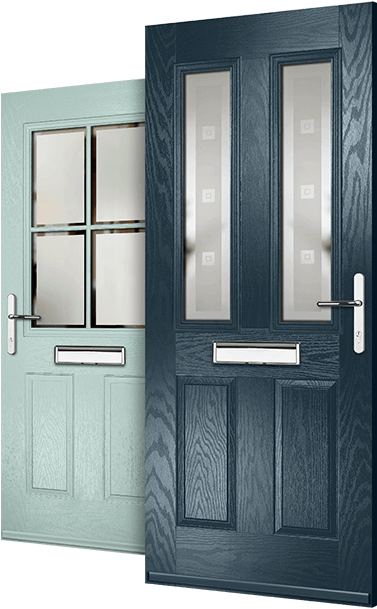
- Four-panel and six-panel doors. Two or four raised panels at the bottom, glass or panels above. The classic look for 1930s semis, Victorian terraces and most estate houses. Safe, timeless, and the most popular choice we fit.
- Two-panel with tall glass. Two long glazed panes above two panels. Lets more light into a dark hallway and suits terraces and semis.
- Cottage and stable styles. Vertical boarding with a small window at the top. Right for cottages, farmhouses and anything with a rural feel. Looks odd on a modern estate house.
- Half-glazed arches and fanlights. A curved glass panel at the top. Suits older houses with an existing arched opening.
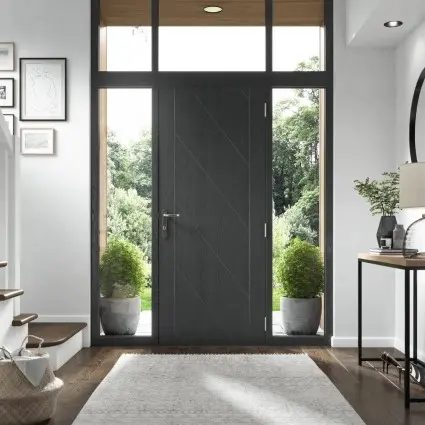
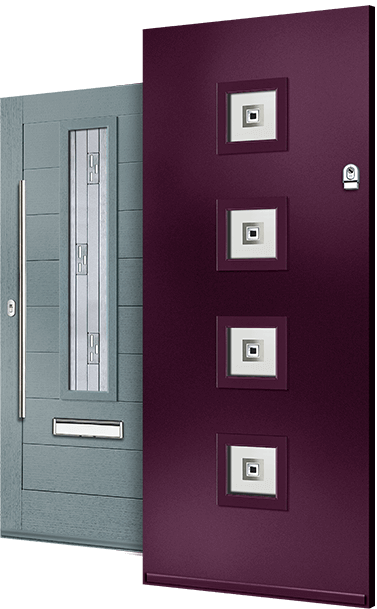
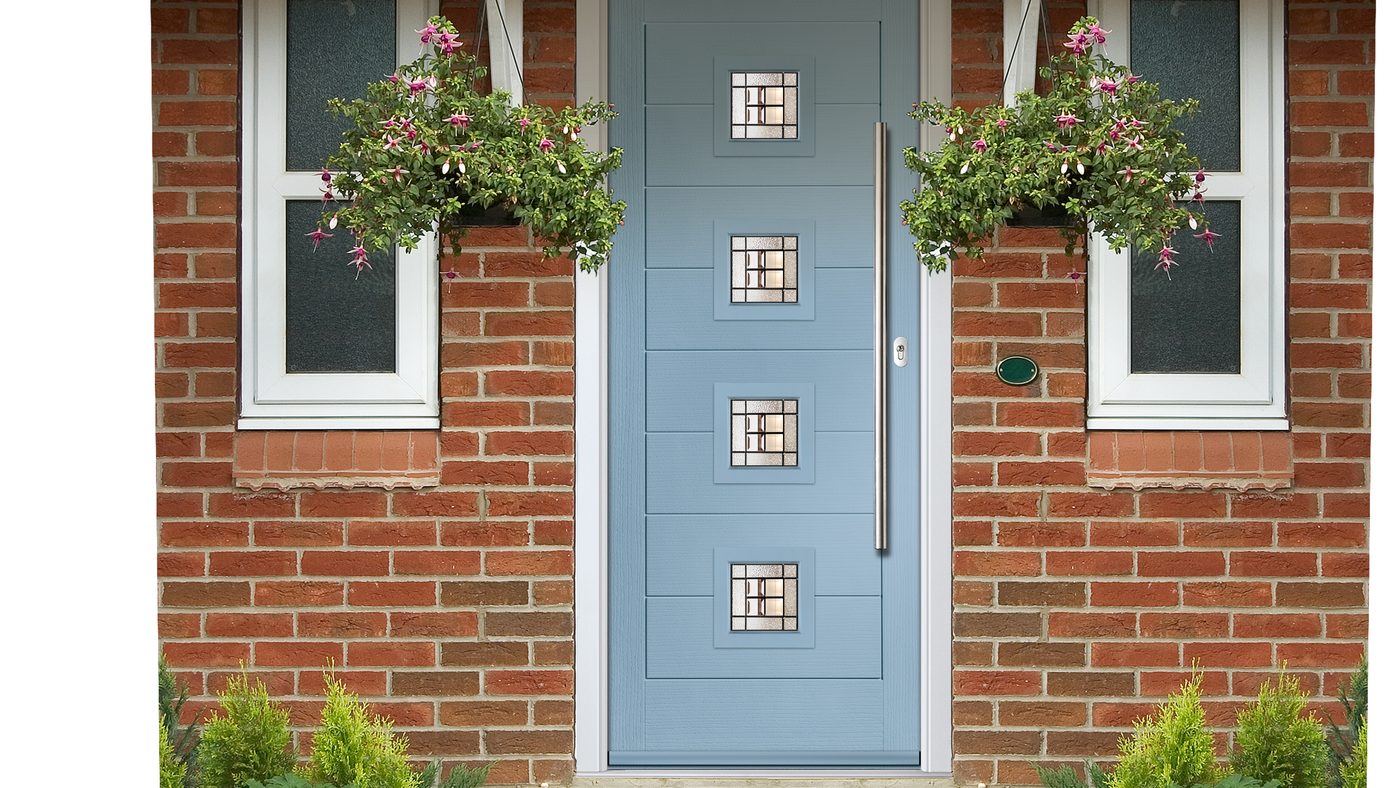
- Contemporary. Flat slab, long narrow glass, a bar handle. Right for new builds and modern renovations. Wrong for a period house.
A quick test: stand across the road and look at the house. The door should look like it was always there.
2. Colour: the decision people get wrong
Colour is where most people hesitate, and it is the thing that changes the look of the house most. A few rules that work:
- Dark colours on light brick. Anthracite grey, black and navy look sharp on cream render, buff brick and painted houses.
- Warm colours on red brick. Chartwell green, cream, white and oak-effect sit well against red and orange brick. Grey can look cold against red brick.
- Red and blue are classics. A red door on a Victorian terrace has never gone out of fashion. A deep blue on a 1930s semi always looks right.
- Match the windows or contrast on purpose. If your windows are anthracite, a matching door is safe. A contrasting door in a strong colour can look better, as long as it is clearly a choice and not an accident.
- White frame, coloured door. The standard combination, and the one on our Classic offer. A coloured frame to match is available but costs a little more.
Colours on a good composite door are in the skin, not painted on, so they do not peel. Dark colours in direct sun get warm but a quality door is built for it.
3. Glass: light versus privacy
Most front doors have some glass. The questions are how much, and how see-through.
- Clear glass gives the most light but anyone on the step can see in.
- Obscure glass lets light through but blurs the view. Several patterns are available, from a fine texture to a heavy one. This is included as standard on our offer doors. See the obscure glass patterns.
- Decorative glass adds lead lines, bevels, coloured pieces or etched designs. It costs extra and is priced at survey. It suits traditional styles best.
- No glass is the most private and most secure, but makes the hallway darker. A solid six-panel door with a glazed side panel is a good compromise.
All door glass is toughened safety glass and double glazed as standard.
4. Hardware: small parts, big difference
- Handle. A lever handle is standard and works for every style. A long stainless bar handle suits contemporary doors. Match the finish to your house numbers and letterplate.
- Finish. Chrome, gold, black and graphite are the common choices. Black hardware on a grey or navy door is the current favourite.
- Lock. Every door we fit has a multi-point lock. Ask for a 3-star cylinder, which resists snapping, and a PAS 24 / Secured by Design specification if security is a priority.
- Letterplate, knocker, numerals. Pick them together so the finishes match. A door with a chrome handle and a gold knocker looks unfinished.
- Threshold. A standard threshold is fine for most homes. A low or mobility threshold helps with prams, wheelchairs and older relatives.
Side panels and top lights
If your opening is wider than a standard door, you have a choice: a wider door, or a standard door with a glazed side panel. Side panels let light into the hall and are the usual answer. They are an extra on top of the door price, so ask for both options to be quoted.
The things nobody tells you
- Doors are made to measure, so allow four to six weeks from order to fitting.
- The old door comes out and the new one goes in on the same half-day visit. The house is never left open.
- Ask what is included. A proper fitted price covers the door, frame, handle, standard glass, fitting, removal of the old door and making good.
- Look at a real sample, not just a brochure. Colours and textures look different in daylight.
Want to try styles and colours on screen? Our Classic door offer page lets you pick a style and a colour and see the door change. Or book a free survey and we will bring samples to your door.
Frequently asked questions
What is the most popular composite door colour?
Anthracite grey, followed by black, then Chartwell green and red. White is still popular on traditional houses.
Which composite door style suits a 1930s semi?
A four-panel door with two glazed panes above, or a two-panel with tall glass. Both are classic for that era.
Can I have a composite door with no glass?
Yes. A solid six-panel door is the most private option. Pair it with a glazed side panel if the hallway needs light.
Is a composite door more secure than uPVC?
Yes. The solid slab is far harder to force than a uPVC panel, and the locking is at least as good.