
The Complete Guide to Choosing Bifold vs Sliding Doors
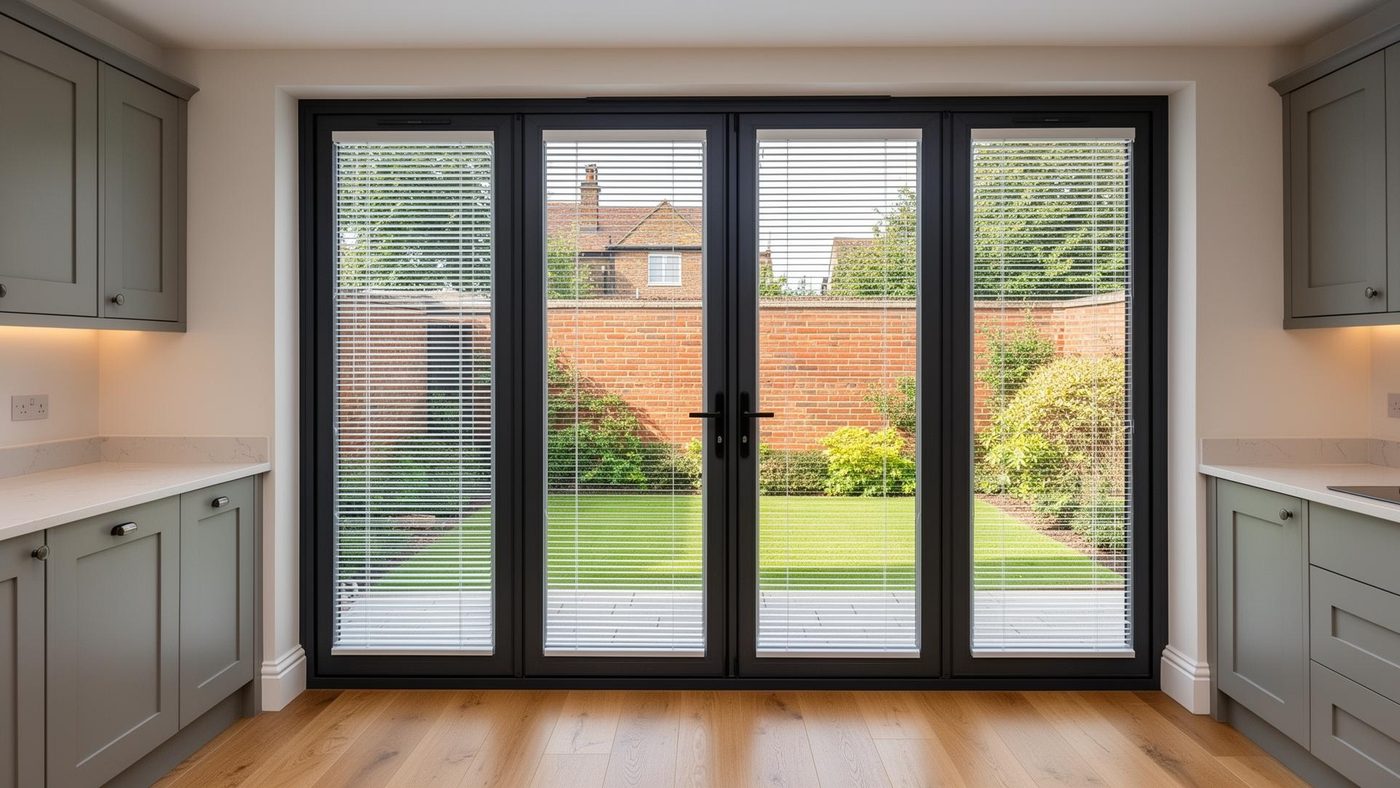
If you're planning a kitchen extension or opening up a room onto your garden, you've probably narrowed it down to two options: bifold doors or sliding doors. We get asked which is "best" almost every week on site visits across Essex, and the honest answer is — it depends on your opening, your budget, and how you actually use the space. There isn't a wrong choice, only the wrong choice for your home.
We've installed both systems in hundreds of homes across Chelmsford, Colchester, Braintree, and the wider Essex and Suffolk area, from narrow Victorian terrace extensions to wide-span new builds. This guide draws on that fitting experience to help you decide — not just a spec sheet comparison, but what each door is actually like to live with once the installers have left.
Why Choose Bifold Doors?
Choose bifold doors if you want the widest possible opening for entertaining, your aperture is 2.5–6m, and you don't mind some visible frame when the doors are stacked.
Choose sliding doors if you want the best possible view and the slimmest sightlines, you need everyday access without folding panels back, or your opening is very wide (6m+).
If you want the full reasoning — including the things most guides don't mention, like running costs on stacking space and what happens when a panel needs servicing — read on.
How Bifold Doors Work
Bifold doors are made up of individual panels hinged together, which concertina back and stack neatly to one or both sides of the opening when fully open. Most residential bifolds run from 2 to 7 panels, and you can usually include a "traffic door" — a single panel within the set that opens independently like a normal door, so you're not folding back the whole system just to let the cat out.
The Pros and Cons of Bifold Doors
Pros of Bifold Doors
Opens up to around 90% of the total aperture — the widest opening of any door system. Excellent for entertaining and genuinely blending indoor and outdoor space in summer. Flexible configurations: stack left, right, or split to both sides; open in or out. A traffic door gives you quick daily access without opening the full set. Tends to suit smaller or terraced properties well, since it makes a single opening feel much larger.
Cons of Bifold Doors
More visible aluminium when closed — typically 88mm–120mm per vertical join, so sightlines are chunkier than sliders. Stacked panels need internal or external space to park in — this can clash with kitchen units, blinds, or planting if not planned early. More locking points and moving parts than a slider, so day-to-day operation is a little more involved. Usually costs more than a comparable sliding door for the same opening width.
How Sliding Doors Work
Sliding doors use large glass panels that run on a track, with one panel sliding behind or alongside another. Because the panels stay within their own track rather than swinging or folding, they take up no extra space inside or outside the room — what you see is what you get.
Pros of Sliding Doors
The slimmest sightlines available — some systems get down to 20mm at the central mullion, maximising glass and view. No stacking space needed, so furniture and layout aren't restricted. Smooth, simple day-to-day operation — one panel, one motion. Can span very wide openings (many systems handle 6m+) without the bulk of multiple bifold panels. Often more cost-effective than bifolds for the same opening width.
Cons of Sliding Doors
Maximum clear opening is usually 50–66% of the total width, since at least one panel always remains in place. Large panels are heavy — bonded, frameless-look sliders in particular can need specialist lifting equipment to install or replace, which matters if you're in an older property with restricted access. Triple-track and pocket systems (where the door disappears into the wall) need more structural depth, which isn't always possible in a retrofit.
Bifold vs Sliding: Side-by-Side Comparison
Maximum clear opening: Bifold up to ~90%, Sliding ~50–66%. Typical vertical sightline: Bifold 88mm–120mm per join, Sliding 20mm–98mm centre mullion. Best for: Bifold maximum width opening and entertaining, Sliding uninterrupted views and everyday use. Space needed when open: Bifold needs internal or external stacking space, Sliding needs none — stays in track. Typical cost vs the other: Bifold higher for equivalent opening width, Sliding generally more affordable. Good for narrow terraces: Bifold yes — opens up the whole space, Sliding can work but check stacking width needed. Daily access (e.g. letting a dog out): Bifold good, especially with a traffic door, Sliding good — one panel, one motion.
Five Questions to Ask Before You Decide to Get Bifold Doors or Sliding Doors
How wide is your opening, and what's around it?
This is the single biggest factor. If your opening is narrow (under about 2.5m), a bifold can make the room feel significantly larger when open, but check there's enough wall or external space for the panels to stack into. If your opening is wide (5m+), both systems can work, but sliding doors start to win on cost and on keeping sightlines slim across a large span.
Do you use the garden daily, or mainly for entertaining?
If you're in and out constantly — kids, dogs, washing line — a sliding door's single smooth motion, or a bifold with a traffic door, will suit daily life better than folding back a full bifold set every time. If the doors are mainly for opening right up on warmer days and big get-togethers, a full-width bifold opening is hard to beat.
How much do you value the view when the doors are closed?
For most of the year in the UK, your doors will be closed. If uninterrupted garden views matter to you more than a wide-open summer opening, sliding doors' slimmer sightlines are usually the better fit.
What's your budget, including any structural work?
Bifolds are typically the pricier option for a like-for-like opening, partly due to the number of panels and hinges involved. Sliding doors can also add cost if you want a pocket or triple-track system, since these need extra structural depth — something worth discussing with your installer before you commit to a design, especially on an older Essex property where wall build-ups vary.
Is this a retrofit or a new extension?
New extensions give you more freedom to design the opening and floor build-up around either system. Retrofitting into an existing wall — particularly older or solid-wall construction common across parts of Essex and Suffolk — can make deep sliding tracks or pocket systems harder to achieve, where bifolds are often more straightforward to install.
What About Performance and Security?
Whichever you choose, don't compromise here. Look for low U-values (1.2–1.4 W/m²K or better on a good system) to keep heat in and energy bills down. Look for PAS 24 security testing and multi-point locking as standard, not optional extras. Look for toughened or laminated safety glass as standard, with double or triple glazing depending on your build.
Both bifold and sliding systems can meet these standards when specified properly — the door type itself isn't the deciding factor on security or efficiency, the quality of the system and the installation is.
A Note From Our Fitting Teams
The thing most guides don't tell you: the door that looks best in a showroom isn't always the one you'll be happiest with in year three. We've gone back to homes where a beautiful bonded slider needed specialist equipment just to service a damaged pane, and others where a bifold's stacked panels ended up blocking a bit of kitchen worktop nobody accounted for at design stage. Our advice is always the same — bring us your floor plan and how you actually use the space, and we'll tell you honestly which system suits, even if it's not the one with the bigger price tag.
Frequently Asked Questions
Are bifold doors more expensive than sliding doors?
Generally, yes, for a comparable opening width — bifolds have more panels, hinges, and locking points. The exact cost depends on size, configuration, frame material, and glass specification, so it's always worth getting a like-for-like quote for your specific opening.
Can I have both bifold and sliding doors in the same house?
Yes, this is common. A typical approach is sliding doors across the main rear elevation for the view, with bifolds on a side return or smaller opening where a wide opening matters more.
Which is better for a small garden or narrow plot?
Both can work, but check what's behind and beside the opening. Bifolds need stacking space; sliding doors need a parking zone for the moving panel(s). On very tight plots, French doors are sometimes a better fit than either — we're happy to advise if that's your situation.
Do sliding doors let in less light than bifolds?
Usually the opposite — sliding doors typically have slimmer frames and larger glass panels, so they often let in more light when closed than a bifold's multiple framed sections.
How long does installation take?
For a straightforward replacement into an existing opening, most installations are completed in a day. New openings or structural alterations take longer — we'll give you an accurate timeframe at survey stage.
Get Tailored Advice for Your Home
Specs and comparison tables can only take you so far — every opening, wall type, and household is different. As a FENSA-certified, family-run installer covering Essex and Suffolk, we'll survey your space, talk through how you actually use it, and recommend the system that fits — backed by a 10-year guarantee. Get in touch for a free, no-obligation quote.